

Personality can be defined as the set of deep psychological traits that shape the way a person thinks, feels, perceives, and acts. These are relatively stable characteristics, largely unconscious, that are expressed consistently across most contexts of daily life.
A concept with historical origins
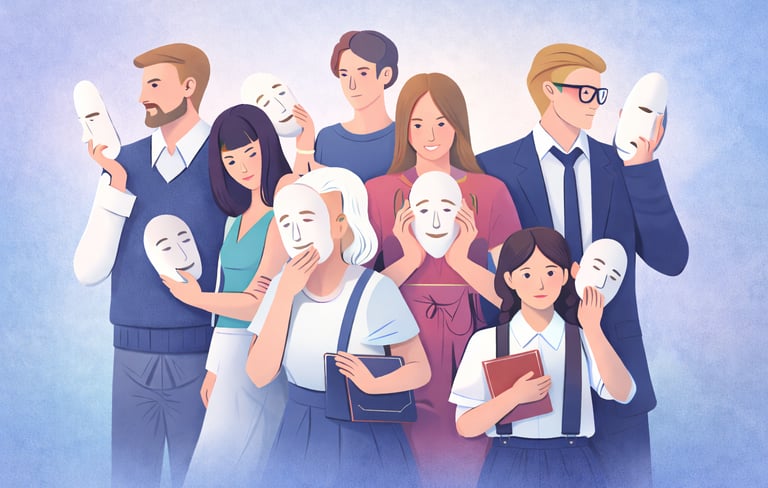
The term personality comes from the Greek word persona, which referred to the mask used by actors in classical theater. Today, the concept has evolved to describe the particular way in which each individual understands themselves, interprets reality, and relates to others and their environment.
Formation of personality
According to Millon and Davis, personality is the result of a complex interaction between biological factors and learning experiences. Among these factors, inherited temperament and early experiences stand out, especially those linked to the family and social environment.
This interaction gives rise to relatively stable patterns of:
Perception
Emotion
Thinking
Coping
Behavior
In this sense, personality develops through multiple mental processes aimed at building self-image, giving meaning to reality, establishing relationships, and resolving environmental challenges.
Functioning and dysfunction
According to Dimaggio and Semerari, these psychological mechanisms may present alterations. When such dysfunctions persist over time and significantly affect different areas of personal and social functioning, they may manifest as personality disorders.
Behavior as an observable expression
From the perspective of John M. Oldham, behavior constitutes the most observable indicator of personality. Although internal processes are not always accessible, behavior allows the identification of consistent patterns that characterize each individual’s personal style. In this sense, personality is unique and unrepeatable, comparable to a fingerprint.
Temperament and environment: a reciprocal influence
From birth, temperament influences the individual’s initial behavior. Throughout development, it is shaped by parenting style, family, and the sociocultural context.
This process is bidirectional in nature: certain temperamental traits can generate specific responses from the environment, which, in turn, tend to reinforce or modify those behaviors, thereby contributing to the consolidation of personality.
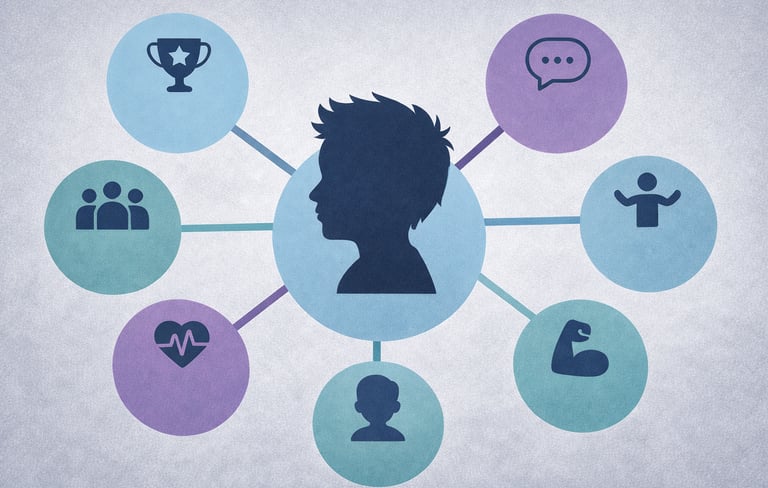
What is Personality?
Personality develops throughout life and is reflected both in self-concept and in the way a person relates to others. In personality disorders, cognitive and relational schemas make it difficult to achieve an accurate perception of oneself and adaptive interpersonal relationships.
A personality disorder is considered to be present when patterns of thinking, perception, and relating to others generate significant impairment in the person’s quality of life.
These patterns are usually characterized by being long-lasting, intense, and inflexible, and by producing personal or interpersonal distress. In this sense, the usual way of feeling, thinking, and acting may limit opportunities for personal and social development.
Currently, it is accepted that personality disorders represent extreme variations of traits present in normal personality. Their difficulties usually begin in early stages and tend to remain stable over time.
Although in the past the term had negative connotations, today it is recognized that it should be approached from a clinical and understanding perspective. Personality includes needs, traits, schemas, and defense mechanisms, but none of these elements fully define a person.
Therefore, although diagnostic classifications facilitate communication among professionals, it is essential not to lose sight of each individual’s uniqueness, since ignoring personal differences may interfere with proper clinical care.
When can we consider a personality disorder?



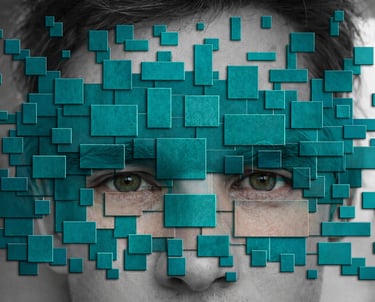


“According to research and clinical findings, a personality disorder is expected to have a serious impact on most areas of a person’s life, including behavior at work and school, interactions with peers and family, and cognitive and emotional functioning, as reflected in their sense of self and others and in their relationship with reality as a whole.”