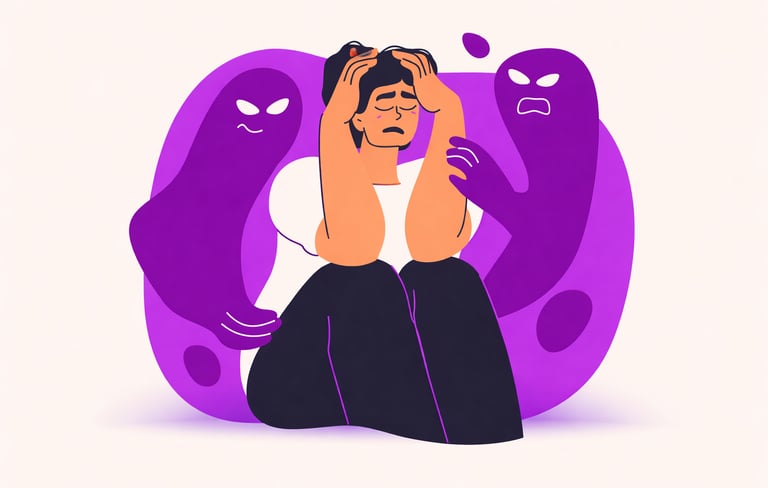


Dissociation is a psychological response in which a disconnection occurs between the mind and the present experience, either from the external environment or from one’s own internal experience. It is a mechanism that usually becomes activated in situations of extreme stress or traumatic experiences.
What is dissociation?
Dissociation appears as a protective strategy against experiences that generate intense emotional distress and feelings of helplessness. Although it temporarily reduces the impact of trauma, it also interferes with the processing and integration of the experience, potentially becoming the mind’s primary response to stress.
It can be triggered by internal or external stimuli related to the traumatic event.
When does it become a disorder?
Dissociation can be transient and occasional, without implying a clinical problem. However, when it occurs persistently or repeatedly, especially during childhood and adolescence, it may consolidate into a rigid pattern that seriously interferes with personal, social, and occupational functioning.
In these cases, we refer to Dissociative Disorders.
Most common manifestations
Dissociation is a broad phenomenon and can be expressed in different ways, which are not mutually exclusive:
Derealization: perception of the environment or other people as unreal, strange, or distorted.
Depersonalization: feeling disconnected from one’s own body and/or emotions; the person may feel like an external observer of themselves.
Dissociative amnesia: difficulty remembering periods of life or relevant personal information.
Dissociative fugue: temporary loss of identity, sometimes accompanied by wandering or adopting another identity.
Identity disturbance: identity is organized into different “parts” with their own ways of feeling, acting, and relating, with possible partial amnesia between them.
Clinical implications and therapeutic care
Dissociative symptoms may appear in isolation or integrated into other trauma-related disorders. In addition, cultural and social context influences how these experiences are interpreted and expressed.
Therapeutic care focuses on understanding the protective function of dissociation, reducing its impact on daily life, and promoting the gradual integration of traumatic experiences, fostering better adaptation, greater emotional stability, and sustained improvement in quality of life.


Dissociative Disorder