
Mediation
Psychological mediation is a safe space to pause conflict and open dialogue. A professional support process that helps people listen, understand, and move forward. Less confrontation, more clarity. A path toward possible agreements and healthier relationships.


Mediation is an alternative and extrajudicial conflict resolution system that promotes the search for agreed and satisfactory solutions for all parties involved. It is not limited to highly severe or exclusively legal conflicts, but is also applied to everyday situations such as family, couple, neighborhood, school, workplace, or community conflicts.
It is a process that proposes working with the other person rather than against them, within a framework of respect, acceptance, and mutual learning. Mediation is voluntary, flexible, and participatory, and it is carried out with the support of an impartial third party — the mediator — who facilitates communication and understanding without imposing decisions.
What is psychological mediation?


The main objective of mediation is not the agreement itself, but to create the necessary conditions to transform the conflict. Its purposes include:
Facilitating a new way of relating between the parties.
Increasing respect, trust, and mutual understanding.
Correcting misunderstandings or distorted information about the conflict.
Creating a safe framework that promotes communication and shared decision-making.
In this way, conflicts can become opportunities for learning and personal and relational growth.
Objectives and characteristics of the process
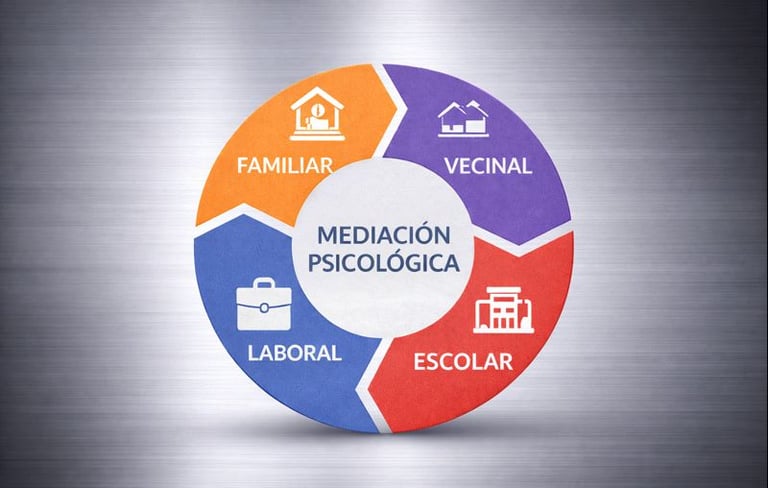
Mediation can be applied in different areas: family, couple, workplace, civil, neighborhood, school, commercial, and restorative justice settings. It can be requested by any adult who wishes to explore a peaceful way of resolving conflict. Both parties may attend, or only one; in the latter case, the mediator will contact the other party to offer an informational session.
The parties maintain control of the process and the decisions at all times. The mediator does not judge, take sides, or resolve the conflict, but instead manages the relational dynamics and facilitates communication under conditions of equality.
Areas of application and access to mediation


The mediation process usually takes place over several sessions of approximately one and a half hours, with the parties themselves setting the pace and schedules. Mediation is voluntary and may be ended at any time, without penalties or negative consequences if no agreement is reached.
When an agreement is reached, it may have full legal validity, especially if it is formalized in a public deed or incorporated into a judicial procedure, thus becoming binding. However, reaching an agreement is not mandatory; what is essential is having created a space for dialogue, listening, and respect.
The presence of lawyers is optional and usually occurs in mediations linked to judicial proceedings; it is not common in family, school, or coexistence-related mediations.
Agreements, duration, and legal aspects