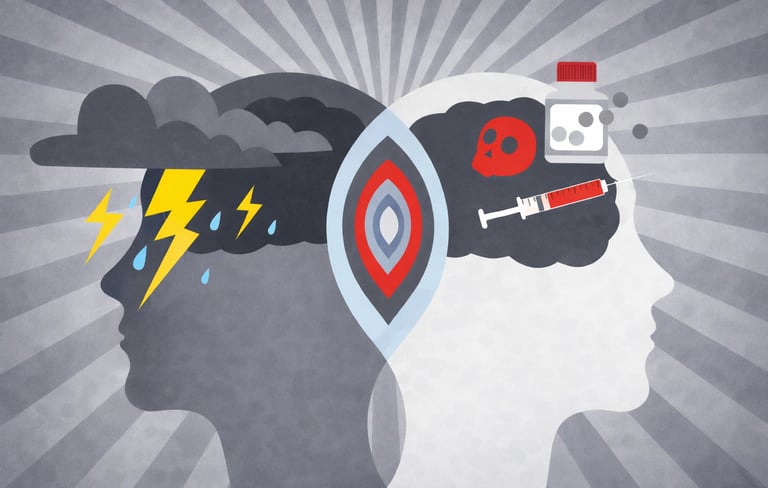


Dual Pathology refers to the coexistence of a Mental Disorder and an Addictive Disorder in the same person. There is no single cause that explains this relationship; rather, it is a complex phenomenon involving multiple interacting factors.
Why are both disorders related?
Scientific evidence indicates that Mental Disorders and Addictions share genetic and environmental factors, increasing vulnerability to developing both. In addition:
• People with Mental Disorders develop addictions more easily and with greater severity.
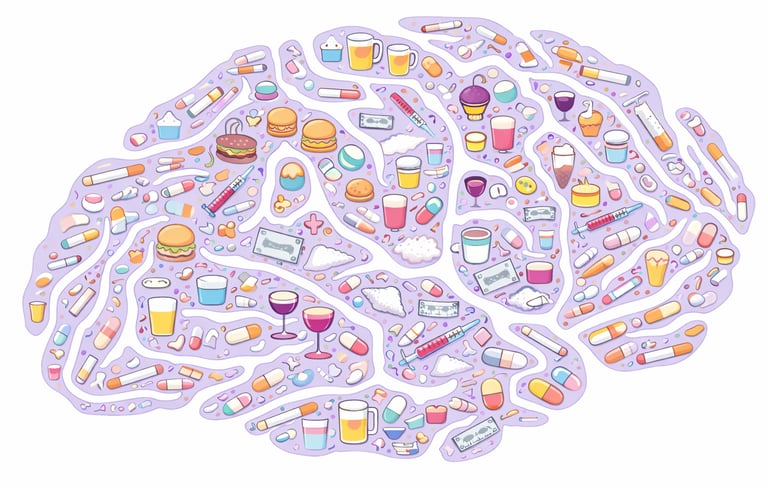
• Addictive substances alter brain functioning and may trigger or worsen Mental Disorders.
• Some individuals use substances to relieve psychiatric symptoms or reduce medication side effects, which can lead to addiction.
Main epidemiological findings
Population studies show that:
People with addiction more frequently present Mental Disorders, and vice versa.
The age of onset of problematic substance use (15–30 years) coincides with the most common period of onset of Mental Disorders.
The greater the number of Mental Disorders, the greater the level of use, severity, and need for treatment.
Use of one substance increases the risk of using others.
The most accessible and affordable substances are the most commonly used.
The usual pattern of initiation is: tobacco and alcohol → cannabis → other drugs.
The risk of developing addiction is highest for tobacco, followed by heroin and cocaine, then alcohol, and finally cannabis and tranquilizers.
Models explaining comorbidity
Common factors
Impulsivity, genetics, and environmental stress increase the risk of both disorders. Impulsivity plays a key role in addictions and in disorders such as ADHD or Antisocial Personality Disorder.Addiction secondary to a Mental Disorder
People with Mental Disorders are more vulnerable: with the same level of consumption, they develop addiction earlier, with greater severity and persistence.Mental Disorder secondary to addiction
Chronic substance use can lead to Mental Disorders, such as psychotic or depressive episodes or cognitive impairment. Alcohol, cocaine, cannabis, and hallucinogens have particularly significant effects in vulnerable individuals.Bidirectional model
Integrates all the above: both disorders influence each other over time.
Implications for treatment
Dual Pathology is associated with poorer prognosis, increased risk of violence and antisocial behavior, and especially low treatment adherence. Therefore, the most effective approach is the integrated model, in which a single therapeutic team simultaneously addresses both disorders, rather than sequential or parallel treatments.


Dual Pathology: Relationship Between Mental Disorders and Addictions