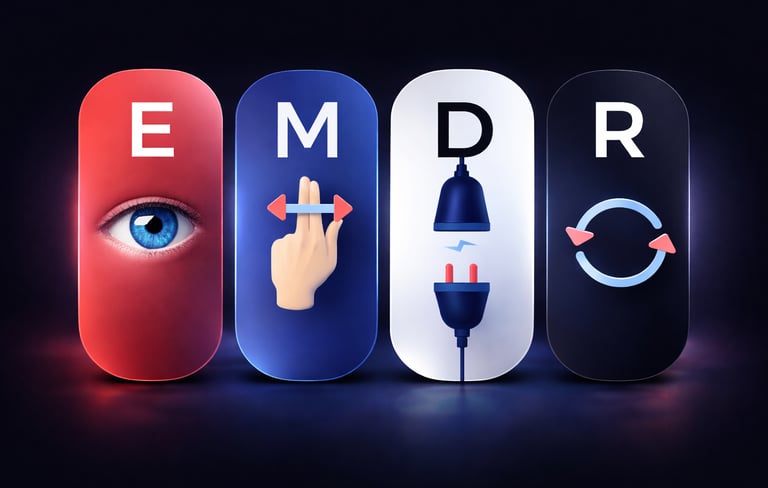


EMDR (Eye Movement Desensitization and Reprocessing) is an effective psychotherapeutic approach for the treatment of emotional difficulties related to distressing or traumatic life experiences. It is used in problems such as phobias, panic attacks, grief, traumatic childhood experiences, accidents, or natural disasters.
Recent scientific research supports the effectiveness of EMDR not only in the treatment of post-traumatic stress disorder, but also in personality disorders, complex trauma, and dissociative disorders.
It is an integrative approach that combines theoretical and clinical contributions from different orientations, including the psychodynamic model, the cognitive-behavioral model, and other information-processing-focused approaches.
What is EMDR?
How does EMDR work?
In the therapeutic process with EMDR, the professional works together with the person to identify a specific problem that becomes the focus of treatment. The duration of the process varies depending on the complexity of the problem: it may range from a few sessions in cases of single-incident trauma to longer treatments in more complex cases.
Work with EMDR is based on three fundamental pillars:
Early life experiences, especially those that have left a significant emotional imprint.
Present stressful situations that trigger or maintain current distress.
Desired thoughts, emotions, and behaviors for the future, promoting healthier adaptation.
The term trauma comes from Greek and means “wound.” In psychology, it refers to an emotional or psychological wound caused by experiences that exceed a person’s ability to cope with them at that moment.
Traditionally, trauma has been associated with high-impact events such as wars, abuse, serious accidents, or natural disasters. These are known as “Big T” traumas due to the objective magnitude of their causes.
However, there are also “small t” traumas, related to experiences that may appear less severe, such as emotional neglect, humiliation, negligence, role reversals within the family, or insecure attachment. Although their external impact may seem smaller, the psychological damage can be equally profound.
The severity of trauma does not depend solely on the type of experience, but also on factors such as personal history, emotional environment, the life stage at which it occurred, and its repetition over time. Regardless of its origin, trauma can significantly affect emotional health, the sense of safety, and the way a person perceives themselves and the world, contributing to the development of negative and maladaptive beliefs.
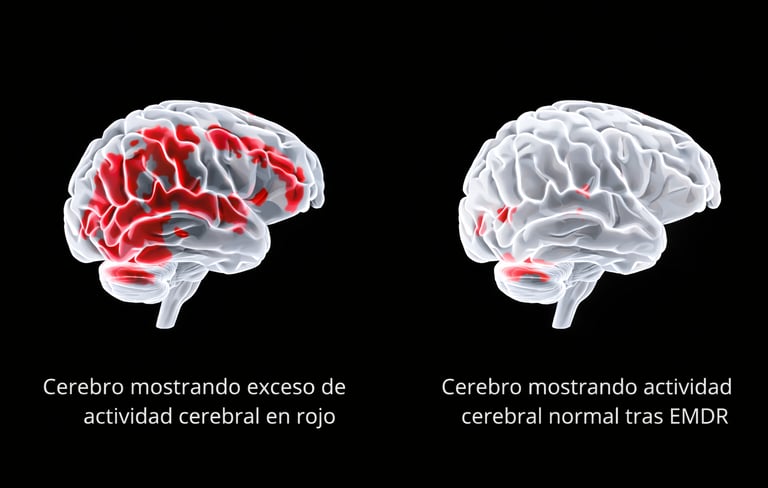
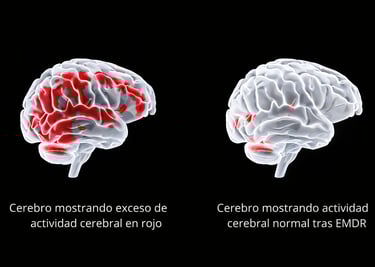
From the EMDR perspective, a person’s current problems are understood as the result of past experiences that have not been adequately processed. In personality disorders, multiple factors converge, particularly early experiences, both clearly traumatic (abuse, maltreatment) and those related to insecure attachment, together with constitutional or acquired biological factors.
Even when there is a strong biological predisposition, it is life experiences and the emotional learning derived from them that modulate and consolidate certain traits, leading to the development of the disorder. The objective of EMDR is to identify, access, and reprocess these experiences, promoting a more adaptive reorganization of emotional information.
The treatment of personality disorders using EMDR requires a deep understanding of the origin and maintenance of distress, as well as therapeutic planning tailored to each case.
At INTRA-TP, an intensive and personalized assessment is carried out, taking into account both the individual and their family context, in order to design interventions adapted to their specific needs. All professionals at the center have accredited training in EMDR and engage in ongoing advanced training.
For further information about the EMDR approach and specialized training, the website of the Spanish EMDR Institute can be consulted.
EMDR and Personality Disorders


What is considered trauma?
EMDR Therapy