CHILD PSYCHOPEDAGOGY
What is psychopedagogy?
Educational psychology is a discipline that assesses and intervenes in the processes that influence children’s development, learning, behaviour and socio-emotional skills. Its aim is to promote their holistic development, enhancing their abilities and providing support tailored to their needs and those of their environment.
At INTRA-TP, we approach educational psychology intervention from a functional, individualised and person-centred perspective. Our work is not based on academic support, but on strengthening the skills that form the basis of learning, independence, participation and well-being in everyday life..
Who is it aimed at?
The Educational Psychology Service is aimed at children aged 0 to 12 who have neurodevelopmental disorders, functional diversity or difficulties with their cognitive, behavioural, emotional, social or adaptive development.
It is also aimed at families who need guidance, support and tools to understand their children’s needs and to support their development in everyday life.
What services do we offer?
Individualised psychopedagogical intervention
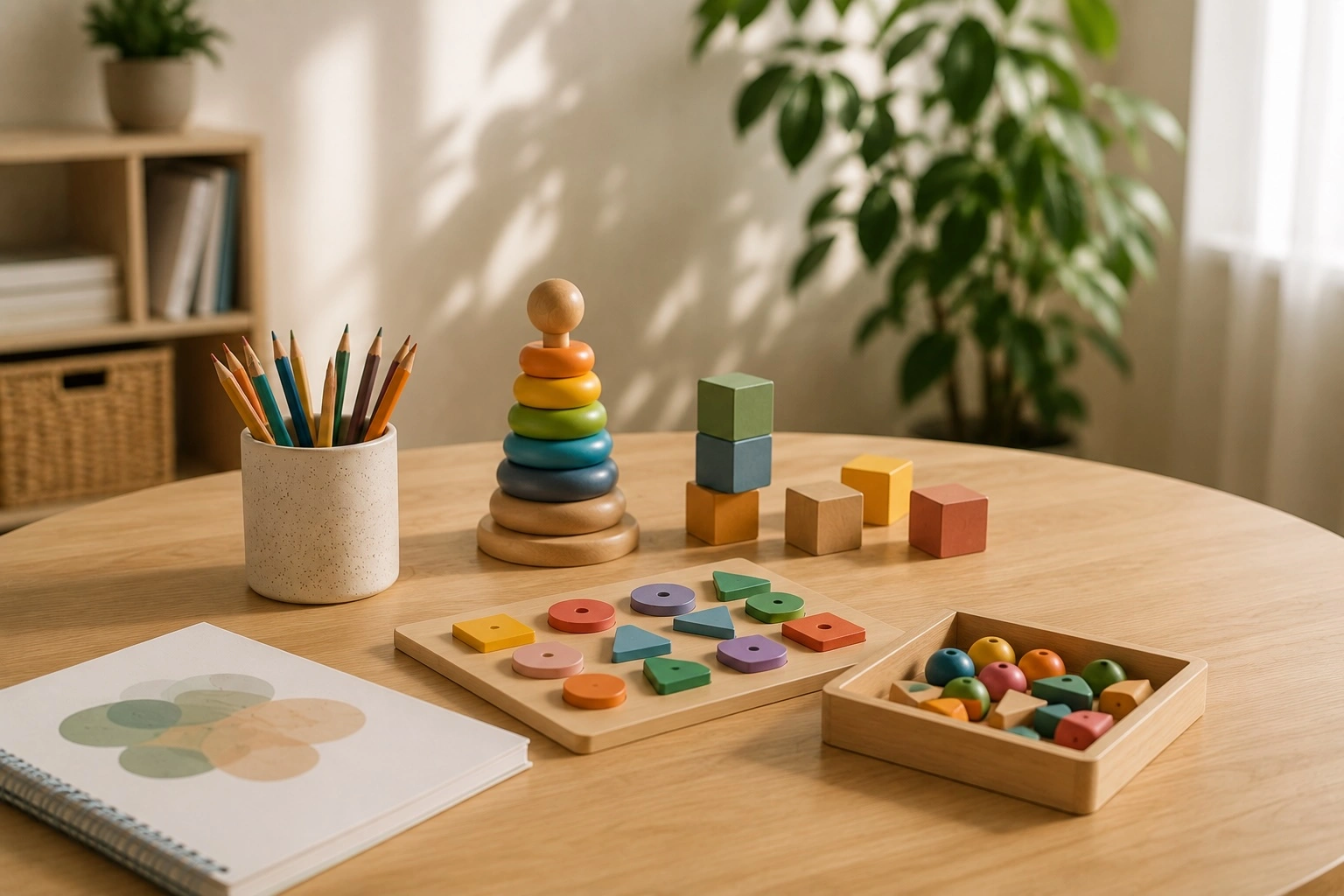
We design intervention programmes tailored to the needs of each child, focusing on areas such as:
- Cognitive stimulation
- Cognitive processes such as attention, memory, reasoning and processing speed.
- Executive functions (planning, organisation, cognitive flexibility, inhibitory control, working memory and self-regulation).
- Development of social-emotional skills.
- Emotional regulation.
- Behaviour and adaptive skills.
- Personal autonomy and strategies to promote participation in different contexts of daily life.
The aim is to promote functional development, by enhancing those skills that enable the child to function with greater independence and to participate actively in their family, school and social environments.
Pyschopedagogical assessments
A psychopedagogical assessment is a comprehensive evaluation process aimed at understanding a child’s functional profile, identifying both their strengths and any potential difficulties that may be affecting their development, learning, behaviour or participation in daily life, as well as guiding decisions regarding the most appropriate interventions and support.
Each assessment is tailored to the individual and adapted to the reason for the consultation and the specific needs of each case. There is no fixed set of tests; instead, the professional selects the most appropriate assessment procedures to obtain a comprehensive and accurate picture of the child’s profile.
The valuation process comprises several stages:
- Initial interview with the family, aimed at understanding the reason for the consultation, the child’s developmental history and their current needs.
- Assessment process, involving clinical observation and the administration of standardised tests, scales and other assessment procedures selected according to the characteristics of each individual case.
- Analysis and interpretation of the information obtained from the various assessment sources.
- Addressing difficulties in daily routines (eating, sleeping, playing, studying, organisation or transitions, amongst others).
- Preparation of a psychopedagogy report, setting out the results, conclusions and corresponding recommendations.
- Feedback interview, during which the results of the assessment are explained, the family’s queries are addressed and individualised recommendations and intervention proposals are offered.
Family counselling and guidance
The family is the primary setting for a child’s development. For this reason, family counselling sessions provide a space for support, active listening and collaborative work, in which we offer information, guidance, psychoeducation and practical strategies tailored to the needs of each family and the characteristics of their child.
During these sessions, we can address aspects such as:
- To understand the child’s needs and developmental profile.
- To address any concerns regarding their development, behaviour or learning.
- To provide guidance on fostering communication, independence and emotional regulation at home.
- To address difficulties with daily routines (such as eating, sleeping, playing, studying, organisation and transitions, amongst others).
- To offer strategies for preventing and managing behaviours that cause concern.
- To encourage positive interactions between the child and their family environment.
- To support the family during times of change or when facing new developmental challenges.
- To coordinate objectives and strategies with the school and other professionals where necessary.
Our aim is for families to feel supported, understood and empowered to tackle everyday situations with greater confidence and assurance. We work from a collaborative perspective, respecting each family’s pace, values and needs, so that the strategies agreed upon can be integrated naturally into their daily lives and contribute to the well-being of all their members.

What instruments do we use?
The assessment tools that may be used, depending on the needs of each individual case, include standardised tests to assess adaptive functioning, cognitive functioning, attention, executive functions, language, academic learning, social cognition and socio-emotional development.
Some of the tools we use, amongst others, are:
- Vineland-3.
- WISC-V.
- Differences Perception Test (CARAS-R).
- ATENTO.
- CELF-5.
- Theory of Mind or false belief tests.
- PROLEC-SE-R.
- PROESC.
- TEDI-MATH.
- BASC-3.
- SNAP-IV – M-CHAT.
- ENFEN.
The information gathered during the assessment enables us to understand the child’s overall functioning, identify their strengths and needs, set intervention objectives tailored to their profile, and provide specific guidance to both the family and, where appropriate, the school and other professionals involved.
Our way of working
At INTRA-TP, we believe that every child and every family is unique. For this reason, all our interventions are based on an individualised assessment and are carried out using a respectful, functional approach that focuses on each person’s strengths. We work closely with the family and, where necessary, with the school and other relevant professionals, fostering coordination between different settings to promote functional development, greater participation in everyday life and a better quality of life. Our support is not limited to the session itself. We aim to ensure that the strategies and skills learnt can be applied at home, at school and in the various settings in which the child participates.