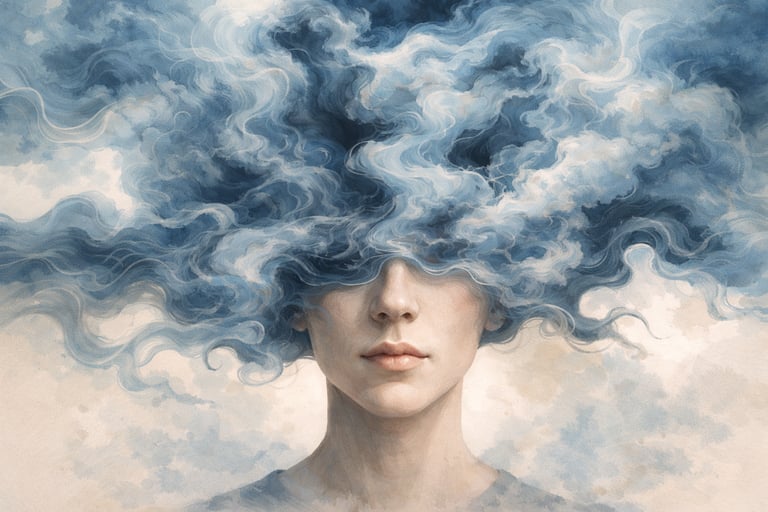

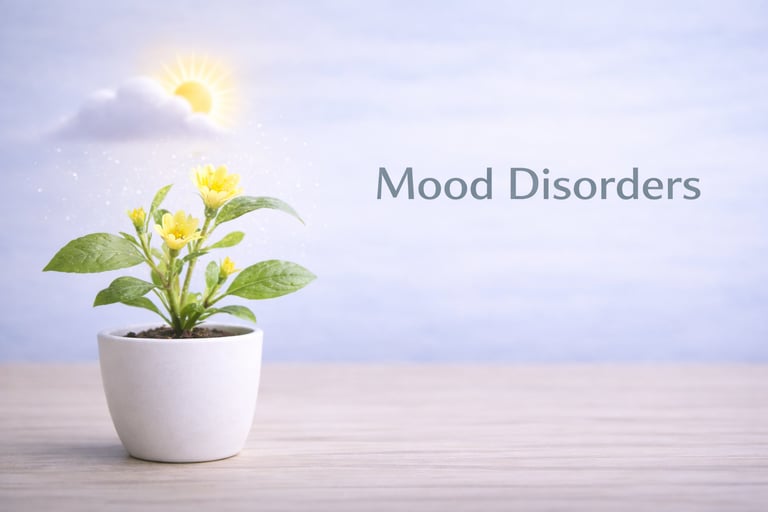
Mood disorders are significant and persistent changes in emotional state that affect the way a person thinks, feels and interacts with their surroundings. These are not merely occasional mood swings, but states that significantly interfere with daily life.
This category mainly includes depressive disorders and bipolar disorders.
Mood Disorders
Depression is a mood disorder characterised by persistent low mood and a significant loss of interest or pleasure in activities that were previously enjoyable.
It is not a one-off bout of sadness or a temporary reaction to a difficult situation. It is an emotional state that persists over time and interferes with personal, social and work life.
Depression can manifest differently in each person, but some common symptoms include emotional symptoms such as deep sadness or a feeling of emptiness, irritability, hopelessness and a loss of interest or motivation; cognitive symptoms such as recurring negative thoughts, excessive guilt, intense self-criticism, difficulty concentrating and a pessimistic view of the future; and physical symptoms such as sleep disturbances, changes in appetite, constant fatigue and psychomotor retardation or agitation.
In some cases, thoughts related to death or a desire to disappear may arise, which requires immediate professional attention.
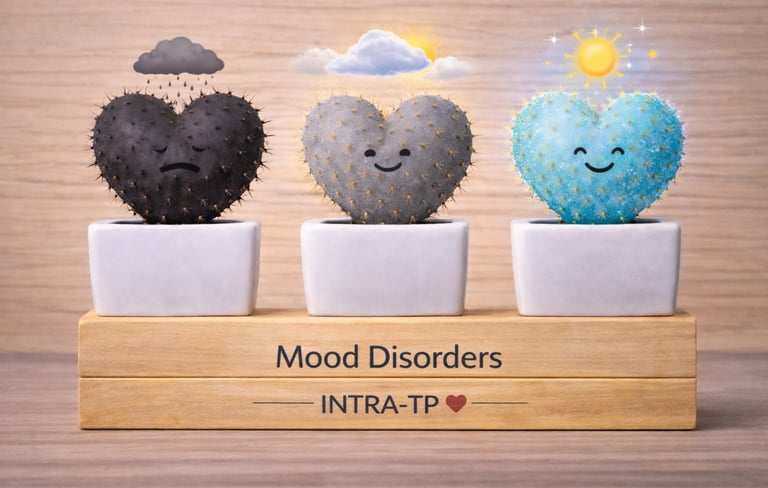
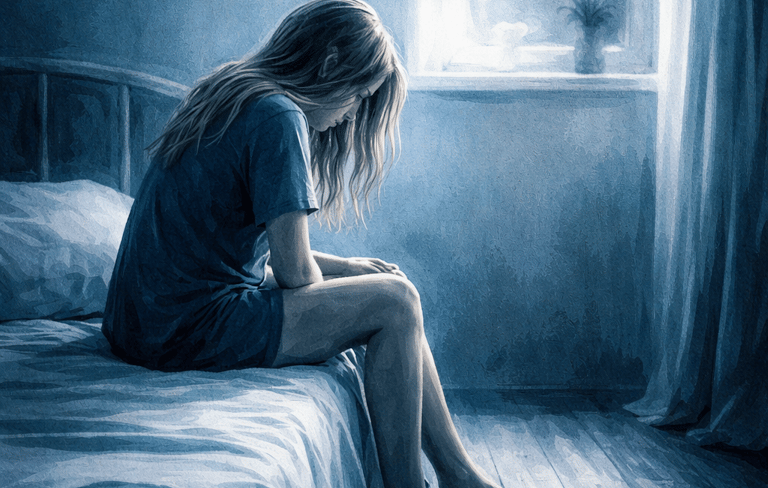
Depression does not have a single cause. It is usually the result of the interaction between various factors, which may be biological (genetic vulnerability or neurochemical changes), psychological (negative thinking patterns, perfectionism or a history of trauma) or social (losses, break-ups, prolonged stress or isolation).
People often feel that “they shouldn’t be feeling this way”, which increases their sense of guilt and makes it harder for them to ask for help.
Related difficulties
Depression does not only affect one’s emotional state; it can also lead to a deterioration in personal relationships, poor performance at school or work, increasing isolation, a loss of interest in enjoyable activities or hobbies, and a sense of loss of identity.
Furthermore, the environment can exacerbate the problem, thereby increasing misunderstanding and stigma.
Recovery and hope
Although depression can make a person feel that nothing is ever going to change, clinical evidence shows that recovery is possible. With the right support, many people regain their energy, motivation and sense of purpose.
Asking for help is not a sign of weakness, but an act of self-care and self-responsibility.
Still have questions? Get in touch with us
What are mood disorders?
What is depression?
Why does depression occur?